Australia Christmas Clipart: A Designer’s Stitch Review
As an embroidery designer who has spent countless hours digitizing and testing files for real-world application, I approach every new asset with a critical eye. We are not just looking at pretty pictures on a screen; we are evaluating how lines translate into thread, how colors interact with fabric texture, and whether a design holds up under the needle of a high-speed machine. Recently, I evaluated the Australia Christmas Clipart Bundle, a collection falling under the broader category of Illustrations, to determine its viability for commercial and personal embroidery projects. This is not a basic product description, but a practical assessment of how these assets perform when moved from digital concept to tangible, stitched reality.
First Impressions: Mood and Visual Personality
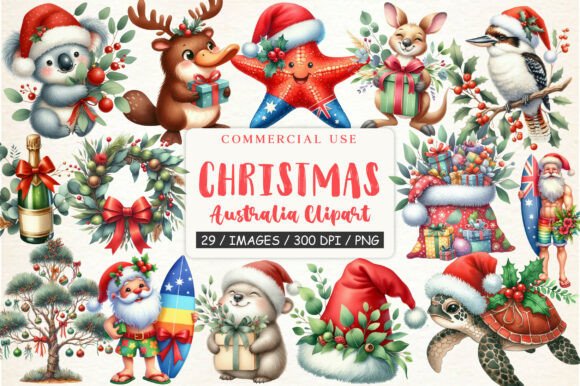
The immediate appeal of the Australia Christmas Clipart Bundle lies in its distinct thematic fusion. It captures the unique juxtaposition of traditional holiday warmth with the laid-back, sun-drenched aesthetic of an Australian summer Christmas. The shapes are clean, and the layout feels balanced, avoiding the clutter that often plagues seasonal graphics. For an embroidery project, this clarity is vital. Complex, messy illustrations rarely translate well into stitch work, but these designs possess a visual personality that suggests they can be simplified effectively for machine embroidery without losing their charm.
The mood is playful yet sophisticated, making it suitable for a wide range of demographics. Whether you are targeting young families looking for baby embroidery items or adults seeking quirky holiday apparel, the design language bridges the gap. The level of detail appears moderate, which is a positive indicator for stitch density management. Overly detailed clipart often requires excessive satin stitch or dense fill stitch areas that can puckers fabric, but these illustrations seem to prioritize bold outlines and recognizable forms, which is ideal for durable, high-quality stitching.
Real-World Application: From Screen to Stitch
To truly test the value of any design asset, I imagine it in a specific production scenario. Let us consider a custom embroidered tote bag, a staple item for many Etsy sellers and small shop owners. Using elements from the Australia Christmas Clipart Bundle, I envision a canvas tote featuring a stylized kangaroo wearing a Santa hat, perhaps accompanied by native flora like eucalyptus or wattle. The bold lines of the clipart would translate beautifully into a combination of running stitch for outlines and satin stitch for text or smaller accents.
Beyond tote bags, this bundle shows strong potential for sweatshirt embroidery. The relaxed nature of the theme fits perfectly on casual winter wear, even if the imagery suggests summer. When applied to a fleece or cotton-blend hoodie, the design needs to stand out against the textured fabric. The visual weight of these illustrations seems sufficient to remain visible without getting lost in the pile of the material. For boutique branding, these assets could serve as the foundation for a cohesive holiday collection, offering a fresh alternative to the standard snowflake and reindeer motifs that saturate the market.
For those creating personalized gifts, such as aprons or kitchen towels, the playful nature of the clipart adds a layer of whimsy that enhances giftability. A tea towel featuring a koala holding a candy cane becomes more than just a kitchen accessory; it becomes a conversation piece. The key here is ensuring that the thread colors chosen provide enough contrast against the fabric background, a crucial step in maintaining the integrity of the original illustration.
Navigating Technical Challenges and Fabric Constraints
While the aesthetic is promising, practical embroidery requires careful consideration of technical limitations. Not every element in an illustration bundle is ready for immediate stitching. Small details, such as tiny facial features on animals or fine leaf veins, may require simplification. If you are working with a small hoop size, you must assess whether the design retains its clarity when scaled down. Intricate corners and thin lines can break or look jagged if the stitch density is not adjusted properly.
Fabric choice plays a pivotal role in the success of these designs. On stretchy fabrics like jersey t-shirts or baby clothes, stability is paramount. I recommend using a cut-away stabilizer to prevent distortion, especially if the design includes larger fill stitch areas. For textured fabrics like terry cloth towels, the design might need to be slightly enlarged to ensure the stitches bridge the loops of the fabric rather than sinking into them. Dark fabrics present another challenge; if the clipart relies on light colors for definition, you may need to add a white underlay or adjust the thread palette to ensure visibility.
Curved surfaces, such as caps or hats, require extra caution. Elements from the Australia Christmas Clipart Bundle should be positioned carefully to avoid distortion around the seams. Detailed corners can bunch up on curved structures, so simplifying the design or reducing the stitch count in those areas might be necessary for a professional finish.
Enhancing Brand Value and Customer Trust
Using high-quality, distinctive design assets directly impacts the perceived value of your handmade product. When customers see crisp, well-executed embroidery that features unique themes like an Australian Christmas, it signals professionalism and attention to detail. This builds trust and encourages repeat business. For digital product sellers, these illustrations can be used in printable mockups to showcase potential finished products, helping buyers visualize the end result before purchasing.
Consistency in brand presentation is easier to achieve when you have a versatile bundle like this. Whether you are creating embroidered patches for a craft fair or digital embroidery files for online sale, having a cohesive set of graphics allows for a unified marketing strategy. The uniqueness of the theme helps your products stand out in a crowded marketplace, driving buyer engagement through novelty and cultural relevance.
Practical Notes for the Embroidery Designer
Before committing to a full production run, always test the design on scrap fabric similar to your final material. Check the thread color contrast against both light and dark backgrounds to ensure readability. Review the stitch density settings in your digitizing software; you may need to reduce density for thicker fabrics to prevent stiffness. Confirm the hoop size required for the largest element in the bundle to ensure it fits your machine’s capabilities.
Inspect small details closely. If the original clipart contains tiny lettering or intricate patterns, consider whether these can be effectively rendered in thread or if they should be omitted for cleaner results. Test the design in black and white mockups to evaluate shape recognition independent of color. Finally, and most importantly, verify the licensing terms. Ensure that the Australia Christmas Clipart Bundle allows for commercial use if you intend to sell finished items or digital embroidery files. Understanding the rights associated with these design assets is essential for protecting your craft business and avoiding legal issues.
In conclusion, the Australia Christmas Clipart Bundle offers a refreshing and viable option for embroidery designers looking to expand their holiday offerings. With careful attention to technical execution and fabric selection, these illustrations can be transformed into stunning, high-value embroidered products that resonate with customers seeking something unique and memorable.